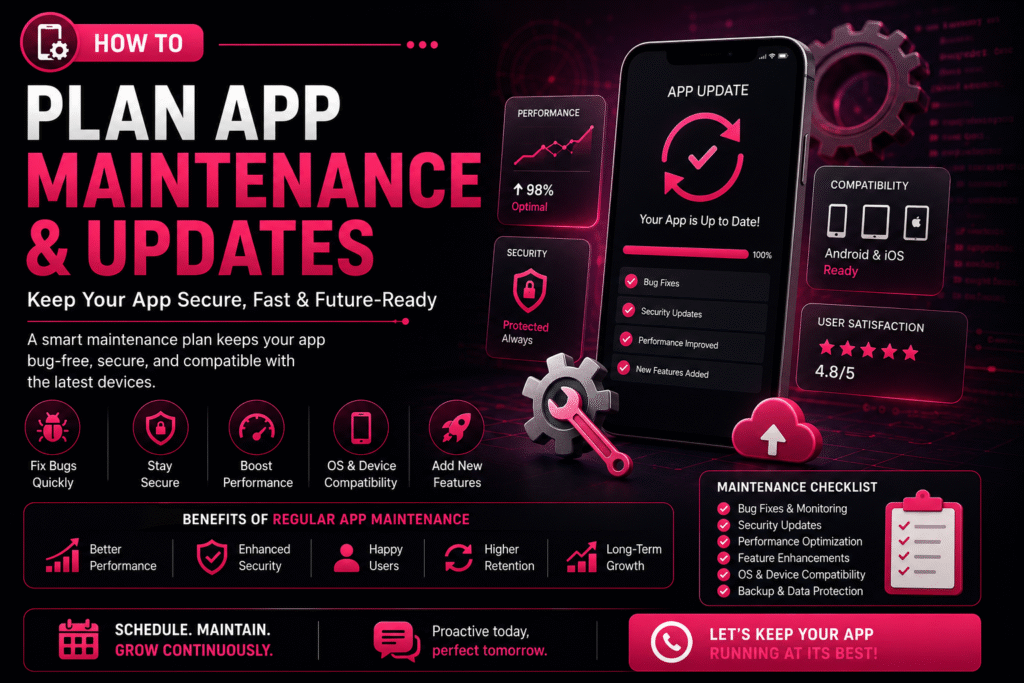
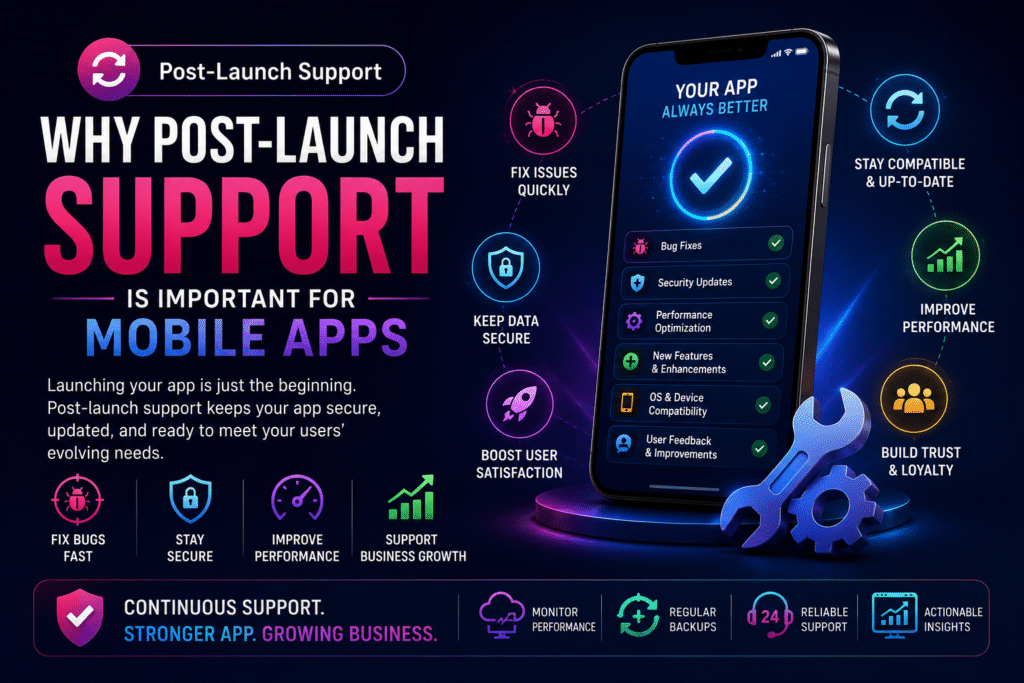
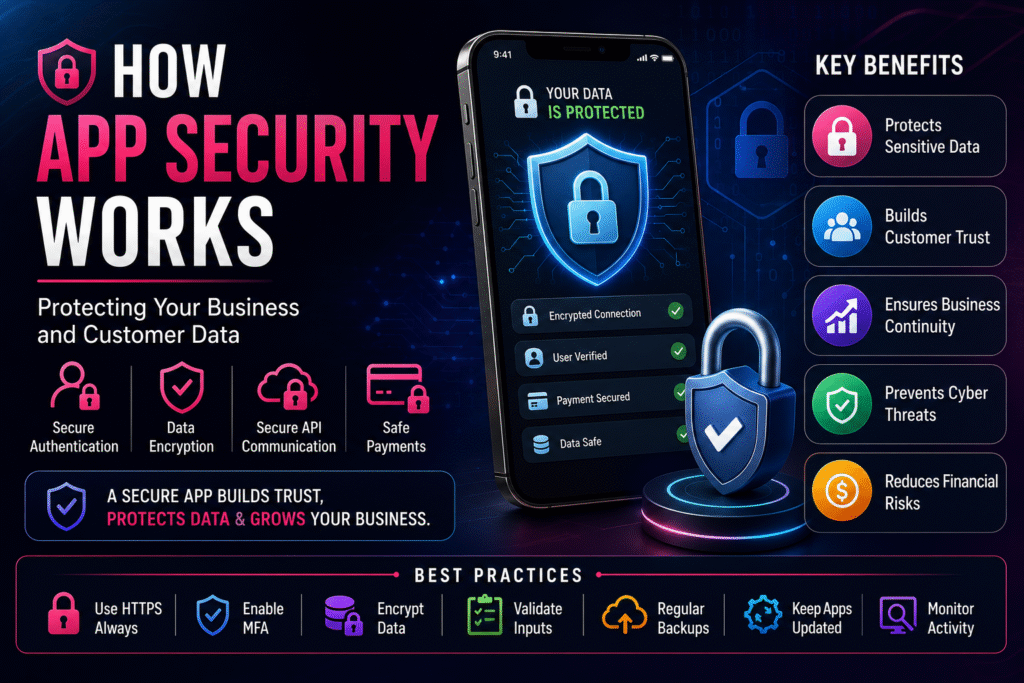
🚀 How to Automate Your Business with a Custom App 📱 Device-Level Security Mobile devices store sensitive business and customer information. Implementing strong device-level security helps protect users from data breaches, malware, and unauthorised access while ensuring a safer mobile experience. 📱 Device Protection Every mobile app should include multiple layers of protection to secure user devices and sensitive information from modern cyber threats. Secure Local Data Storage Biometric Authentication Strong Password Protection Encrypted Communication (SSL/TLS) Root & Jailbreak Detection Session Timeout Management Device Integrity Verification Multi-Factor Authentication (MFA) 🛡️ Why It Matters Strong device-level protection safeguards both users and businesses by preventing unauthorised access, reducing fraud, and ensuring compliance with modern security standards. Protect Customer Privacy Prevent Data Theft Reduce Account Takeovers Improve Brand Trust Meet Industry Compliance Secure Financial Transactions Minimise Cyber Risks Enhance User Confidence 🔍 Regular Security Testing Cyber threats constantly evolve. Regular testing helps identify vulnerabilities before attackers can exploit them, ensuring your application remains secure throughout its lifecycle. 🔍 Security Audits Routine security assessments help uncover hidden weaknesses and improve the overall resilience of your mobile application. Penetration Testing Source Code Review Vulnerability Assessment API Security Testing Authentication Testing Cloud Infrastructure Review Database Security Analysis Compliance Verification ⚙️ Continuous Monitoring Real-time monitoring allows developers to detect unusual behaviour quickly, respond to threats, and minimise potential downtime. Real-Time Threat Detection Crash Monitoring Error Log Analysis Server Health Checks API Monitoring Performance Analytics Security Alerts Automated Incident Response 🚨 Common Cyber Threats Modern mobile applications face a wide range of cybersecurity risks. Understanding these threats helps businesses implement stronger protection measures and reduce the likelihood of data breaches, financial losses, and reputational damage. Cyber Threat Description Business Impact Recommended Protection Risk Level Phishing Attacks Fake emails, SMS, or websites designed to steal user credentials. Account compromise and data theft. Multi-Factor Authentication & User Awareness High Malware Malicious software that steals or damages sensitive information. Data loss and system compromise. App Integrity Checks & Endpoint Security High API Attacks Attackers exploit insecure APIs to access business data. Customer information leakage. API Authentication & Rate Limiting High SQL Injection Malicious database queries targeting vulnerable applications. Database manipulation or theft. Prepared Statements & Input Validation High Man-in-the-Middle Intercepting communication between users and servers. Credential theft and data interception. SSL/TLS Encryption High Weak Passwords Easy-to-guess passwords increase unauthorised access. Account takeover. Strong Password Policy & MFA Medium Outdated Software Older app versions contain known vulnerabilities. Higher security exposure. Regular Updates & Security Patches Medium Denial of Service (DoS) Attackers overload servers with excessive requests. Service disruption and downtime. Cloud Protection & Traffic Filtering Medium Data Leakage Accidental exposure of confidential customer information. Legal penalties and reputation damage. Encryption & Access Controls High Session Hijacking Attackers steal active user sessions. Unauthorised account access. Secure Session Management Medium 🛡️ Prevent Before It Happens Proactive security measures help identify vulnerabilities early, reducing costly cyber incidents and ensuring uninterrupted business operations. 📊 Continuous Monitoring Real-time monitoring enables faster threat detection, quicker response times, and improved overall application reliability. 🔐 Security First Approach Combining encryption, authentication, secure APIs, regular testing, and timely updates creates multiple layers of defence against modern cyber attacks. 🔄 Updates & Security Patches Keeping your mobile application updated is one of the most effective ways to protect users and maintain optimal performance. Regular updates ensure your app remains compatible with the latest operating systems, fixes known vulnerabilities, and delivers an improved user experience. 🔒 Security Vulnerability Fixes Cybercriminals constantly discover new attack methods. Regular security patches close these vulnerabilities before they can be exploited. Fix critical security flaws Improve data encryption Strengthen authentication systems Protect customer information 📱 Operating System Compatibility Android and iOS release frequent updates. Mobile apps should stay compatible with the newest devices and software versions. Support latest Android releases Support latest iOS versions Improve UI compatibility Reduce crashes ⚡ Performance Improvements Updates optimise your application’s speed, responsiveness, memory usage, and battery consumption for a better user experience. Faster loading time Lower battery usage Better app stability Improved responsiveness 💡 Feature Enhancements Continuous improvements allow businesses to introduce new features and keep their applications competitive in a rapidly evolving market. New functionalities UI/UX improvements Third-party integrations Business scalability 🏢 Industries That Require Strong Security Every industry benefits from mobile app security, but some sectors handle highly sensitive customer information and require stronger protection, compliance, and continuous monitoring. 🏦 Banking & Finance Protect financial transactions, payment gateways, customer accounts, and confidential banking information from cyber attacks and fraud. 🏥 Healthcare Secure patient records, prescriptions, telemedicine platforms, and healthcare systems while ensuring regulatory compliance. 🛒 E-Commerce Safeguard customer accounts, payment information, order history, and shopping data against online threats. 🎓 Education Protect student records, online learning platforms, examination systems, and educational resources from unauthorised access. 🚚 Logistics Secure fleet tracking, delivery management, inventory systems, and operational business data. 🏢 Enterprise Apps Protect internal business operations, employee data, confidential documents, and cloud-based enterprise systems. 📡 Telecommunications Secure communication networks, subscriber information, and digital infrastructure against evolving cyber threats. 🏛️ Government Services Protect citizen information, digital public services, and critical infrastructure using enterprise-grade security practices. 💡 Expanded Final Thoughts Launching a mobile app is only the beginning of its journey. Continuous maintenance, security updates, performance optimisation, and feature enhancements are essential to delivering a reliable user experience and ensuring long-term business success. 🔒 Security First Regular security updates, vulnerability fixes, and continuous monitoring help protect customer information while reducing cyber risks and ensuring compliance with modern security standards. ⚡ Better Performance Optimising speed, reducing crashes, improving responsiveness, and enhancing stability keep users engaged and increase customer satisfaction over time. 📈 Business Growth As your business expands, your application should evolve too. Scalable architecture and regular feature enhancements allow your app to grow with your customers. 🤝 Customer Trust Reliable updates, bug fixes, and continuous improvements demonstrate your commitment to delivering a secure, dependable, and high-quality mobile experience. 🎯 Ready to Build & Maintain a Future-Proof Mobile App? Whether you’re launching your