
App Development

Uncategorized

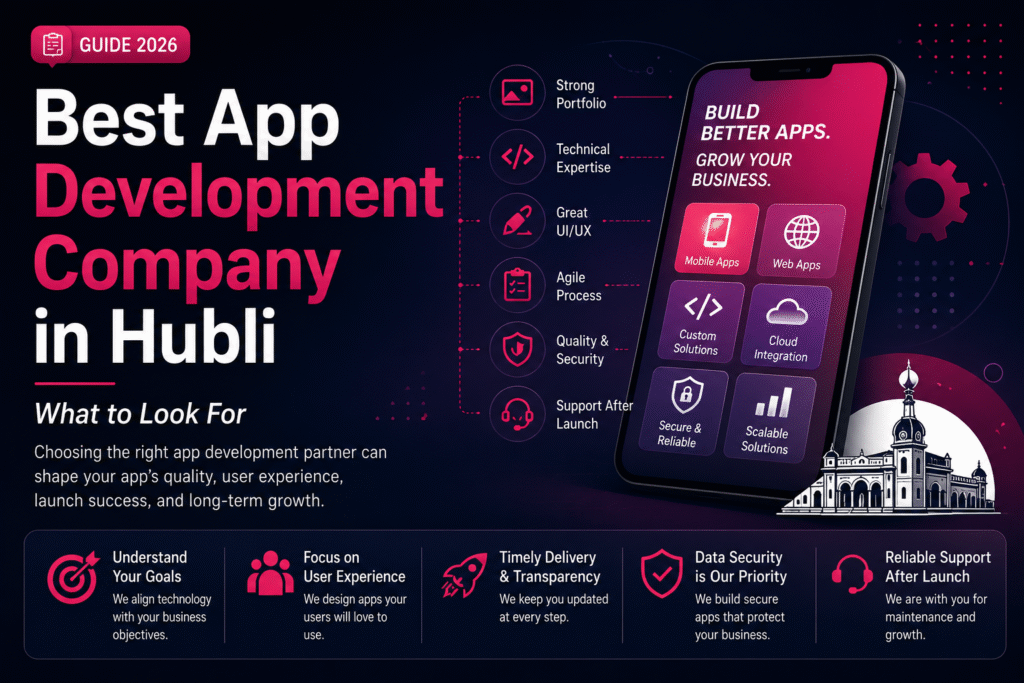
Best App Development Company in Hubli – What to Look For

🚀 How to Automate Your Business with a Custom App Best App Development Company in Hubli – What to Look For | Crawlers Technologies Intro Why It Matters Key Factors Process Security & Cost Red Flags Questions to Ask Hubli Advantage Final Thoughts Business Guide · Hubli, Karnataka Best App DevelopmentCompany in Hubli What to look for before you invest. Your development partner shapes your app’s performance, security, timeline, and long-term success — choose wisely. 🔍 Portfolio 🧠 Tech Expertise 🎨 UI/UX Design 🧪 Testing & QA 🔐 Security 🚩 Red Flags 💰 Pricing Transparency 📅 Timelines Scroll to explore The Stakes Why Choosing the Right Partner Matters A mobile app can become a critical part of how your business operates every day. The wrong development partner can cost far more than money. Your App May Handle 👤 Customer registrations 💳 Online payments 📦 Product orders 📅 Appointments 📊 Customer data 👥 Employee operations ⚙️ Business automation 💬 Real-time communication What Goes Wrong with the Wrong Partner ✗ Delayed launches ✗ Unexpected costs ✗ Poor performance ✗ Security vulnerabilities ✗ App that doesn’t solve your business problem The right partner should understand your business goals — not just your technical requirements. 🍽️ Restaurant Online ordering Delivery tracking Loyalty rewards 🏥 Healthcare Appointment booking Patient records Notifications 🏠 Real Estate Property listings Lead management Site-visit booking Evaluation Criteria 13 Factors to Evaluate Any Development Company Work through this list before signing any contract. Each factor reveals something important about whether a company is the right fit for your project. 01 Check Their Previous App Development Work Don’t just look at their website. Ask to see real, live applications they have designed and developed — not mockups or concept screenshots. Similar industries Similar functionality Android & iOS apps Cross-platform apps UI/UX quality 02 Evaluate Their Technical Expertise A capable team can explain why a particular technology is right for your project — not just what’s popular right now. Flutter React Native Kotlin Swift Node.js Laravel Python APIs & Cloud 03 Don’t Ignore UI/UX Design A technically powerful app can still fail if users find it difficult to use. A good app makes it easy for users to accomplish their goals. User research Wireframes User journeys Prototypes Visual design Usability testing 04 Look for Custom Development Every business has different requirements. The company should build a solution around your specific workflow — not force your business to adapt to a generic product. 05 Understand Their Development Process A professional development process should follow structured stages. Ask how the project will be managed before any work begins. 🔭Discovery → 🗺️Planning → 🎨UI/UX → 💻Dev → 🧪Testing → 🚀Deploy → 🔧Support 06 Ask About Testing & Quality Assurance Never choose a company based only on development speed. A proper QA process catches problems before your customers do. ✅ Functional testing 📱 Device testing ⚡ Performance testing 🔒 Security testing 🔗 API testing 🔁 Regression testing Critical Factors Security, Pricing & Scalability 07 Check Their Approach to App Security Security should be built into the development process — not added as an afterthought at the end. Data encryption Secure APIs Authentication Role-based access Database security Security testing Regular updates 08 Don’t Choose the Cheapest Quote Automatically Two companies can quote different prices because their proposals cover different scopes. ❌ Wrong Question “Who is the cheapest?” ✅ Right Question “What exactly am I getting for this investment?” UI/UX design scope Testing included Cloud infrastructure Integrations App Store deployment Maintenance plan 09 Ask About Timeline & Milestones Be cautious of companies promising complex applications in unrealistically short timelines. A professional proposal should include clearly defined stages. Discovery timeline Design milestones Development phases Testing period Client review stages Post-launch support 10 Evaluate Communication Communication can make or break a software project. A good partner makes technical information understandable to business owners. 👤 Dedicated project manager? 📅 Regular update frequency? 🛠️ Communication tools used? 💬 Feedback collection process? 11 Check Post-Launch Support Development doesn’t end when your app reaches the store. After launch, your app needs ongoing attention. Bug fixes Security updates OS compatibility Performance improvements New features Technical support 12 Clarify Source Code & Ownership These details must be clearly defined in your agreement before development begins. Your business should know exactly what is handed over at completion. 📁 Source code 🎨 UI/UX designs 🗄️ Database 📄 Documentation ☁️ Cloud accounts 📱 App Store accounts ⚖️ IP ownership 13 Ask About Scalability Don’t build only for today. Think about where your business could be in three to five years and whether the architecture supports that growth. Can this support more users? Can we add new features later? Can it integrate with our CRM or ERP? Can it expand to additional markets? Warning Signs 🚩 Red Flags to Watch Out For A strong development partner is transparent about both opportunities and limitations. Watch for these warning signs. ✗Extremely low quote without understanding your requirements ✗Promises unrealistic delivery timelines ✗Cannot show relevant previous work ✗Avoids explaining the technology stack ✗Unclear ownership and IP terms ✗Doesn’t discuss testing or QA process ✗No post-launch support plan ✗Difficult or slow communication ✗Focuses only on selling instead of understanding your business Due Diligence ✅ Questions to Ask Before Hiring These questions help you compare companies on value and capability — not price alone. Take them into every discovery call. 01Have you developed similar applications before? 02Can I see examples of your live, working apps? 03Which technology do you recommend and why? 04Will you handle UI/UX design as part of this project? 05What testing process do you follow at each stage? 06How will project progress be communicated to me? 07What happens if requirements change during development? 08Who owns the source code at the end of the project? 09Do you provide App Store and Play Store deployment? 10What post-launch support do you provide and at what cost? 11Can the application scale as my business grows? 12What exactly is included in the quoted price? Working Locally 🏆
DEVELOPMENT

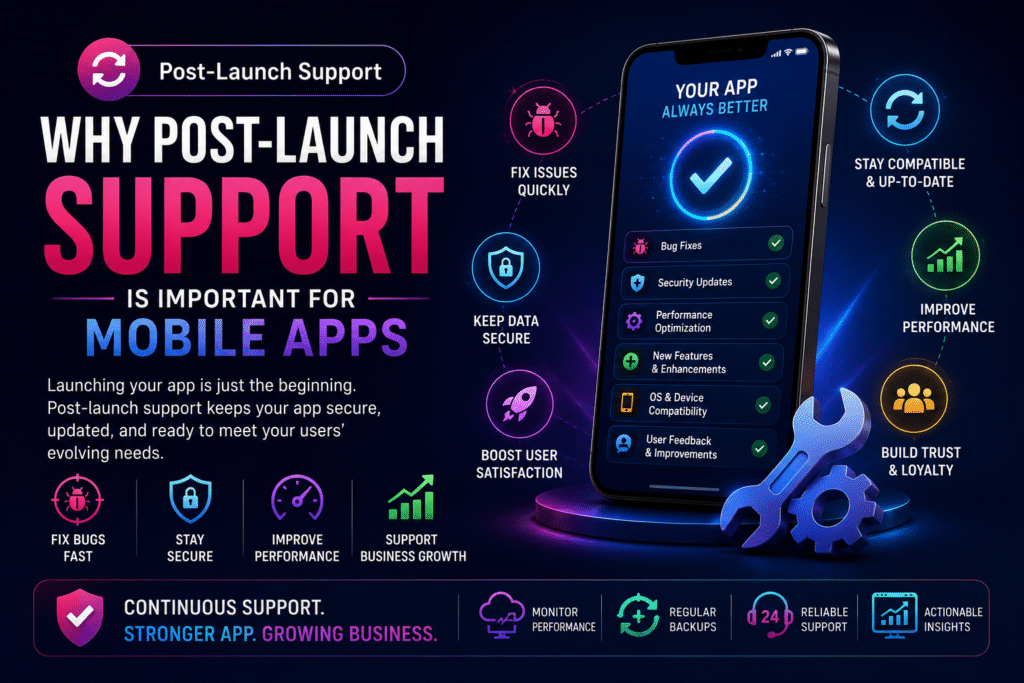
🔄 Why Post-Launch Support Is Important for Mobile Apps

🚀 How to Automate Your Business with a Custom App 📱 Device-Level Security Mobile devices store sensitive business and customer information. Implementing strong device-level security helps protect users from data breaches, malware, and unauthorised access while ensuring a safer mobile experience. 📱 Device Protection Every mobile app should include multiple layers of protection to secure user devices and sensitive information from modern cyber threats. Secure Local Data Storage Biometric Authentication Strong Password Protection Encrypted Communication (SSL/TLS) Root & Jailbreak Detection Session Timeout Management Device Integrity Verification Multi-Factor Authentication (MFA) 🛡️ Why It Matters Strong device-level protection safeguards both users and businesses by preventing unauthorised access, reducing fraud, and ensuring compliance with modern security standards. Protect Customer Privacy Prevent Data Theft Reduce Account Takeovers Improve Brand Trust Meet Industry Compliance Secure Financial Transactions Minimise Cyber Risks Enhance User Confidence 🔍 Regular Security Testing Cyber threats constantly evolve. Regular testing helps identify vulnerabilities before attackers can exploit them, ensuring your application remains secure throughout its lifecycle. 🔍 Security Audits Routine security assessments help uncover hidden weaknesses and improve the overall resilience of your mobile application. Penetration Testing Source Code Review Vulnerability Assessment API Security Testing Authentication Testing Cloud Infrastructure Review Database Security Analysis Compliance Verification ⚙️ Continuous Monitoring Real-time monitoring allows developers to detect unusual behaviour quickly, respond to threats, and minimise potential downtime. Real-Time Threat Detection Crash Monitoring Error Log Analysis Server Health Checks API Monitoring Performance Analytics Security Alerts Automated Incident Response 🚨 Common Cyber Threats Modern mobile applications face a wide range of cybersecurity risks. Understanding these threats helps businesses implement stronger protection measures and reduce the likelihood of data breaches, financial losses, and reputational damage. Cyber Threat Description Business Impact Recommended Protection Risk Level Phishing Attacks Fake emails, SMS, or websites designed to steal user credentials. Account compromise and data theft. Multi-Factor Authentication & User Awareness High Malware Malicious software that steals or damages sensitive information. Data loss and system compromise. App Integrity Checks & Endpoint Security High API Attacks Attackers exploit insecure APIs to access business data. Customer information leakage. API Authentication & Rate Limiting High SQL Injection Malicious database queries targeting vulnerable applications. Database manipulation or theft. Prepared Statements & Input Validation High Man-in-the-Middle Intercepting communication between users and servers. Credential theft and data interception. SSL/TLS Encryption High Weak Passwords Easy-to-guess passwords increase unauthorised access. Account takeover. Strong Password Policy & MFA Medium Outdated Software Older app versions contain known vulnerabilities. Higher security exposure. Regular Updates & Security Patches Medium Denial of Service (DoS) Attackers overload servers with excessive requests. Service disruption and downtime. Cloud Protection & Traffic Filtering Medium Data Leakage Accidental exposure of confidential customer information. Legal penalties and reputation damage. Encryption & Access Controls High Session Hijacking Attackers steal active user sessions. Unauthorised account access. Secure Session Management Medium 🛡️ Prevent Before It Happens Proactive security measures help identify vulnerabilities early, reducing costly cyber incidents and ensuring uninterrupted business operations. 📊 Continuous Monitoring Real-time monitoring enables faster threat detection, quicker response times, and improved overall application reliability. 🔐 Security First Approach Combining encryption, authentication, secure APIs, regular testing, and timely updates creates multiple layers of defence against modern cyber attacks. 🔄 Updates & Security Patches Keeping your mobile application updated is one of the most effective ways to protect users and maintain optimal performance. Regular updates ensure your app remains compatible with the latest operating systems, fixes known vulnerabilities, and delivers an improved user experience. 🔒 Security Vulnerability Fixes Cybercriminals constantly discover new attack methods. Regular security patches close these vulnerabilities before they can be exploited. Fix critical security flaws Improve data encryption Strengthen authentication systems Protect customer information 📱 Operating System Compatibility Android and iOS release frequent updates. Mobile apps should stay compatible with the newest devices and software versions. Support latest Android releases Support latest iOS versions Improve UI compatibility Reduce crashes ⚡ Performance Improvements Updates optimise your application’s speed, responsiveness, memory usage, and battery consumption for a better user experience. Faster loading time Lower battery usage Better app stability Improved responsiveness 💡 Feature Enhancements Continuous improvements allow businesses to introduce new features and keep their applications competitive in a rapidly evolving market. New functionalities UI/UX improvements Third-party integrations Business scalability 🏢 Industries That Require Strong Security Every industry benefits from mobile app security, but some sectors handle highly sensitive customer information and require stronger protection, compliance, and continuous monitoring. 🏦 Banking & Finance Protect financial transactions, payment gateways, customer accounts, and confidential banking information from cyber attacks and fraud. 🏥 Healthcare Secure patient records, prescriptions, telemedicine platforms, and healthcare systems while ensuring regulatory compliance. 🛒 E-Commerce Safeguard customer accounts, payment information, order history, and shopping data against online threats. 🎓 Education Protect student records, online learning platforms, examination systems, and educational resources from unauthorised access. 🚚 Logistics Secure fleet tracking, delivery management, inventory systems, and operational business data. 🏢 Enterprise Apps Protect internal business operations, employee data, confidential documents, and cloud-based enterprise systems. 📡 Telecommunications Secure communication networks, subscriber information, and digital infrastructure against evolving cyber threats. 🏛️ Government Services Protect citizen information, digital public services, and critical infrastructure using enterprise-grade security practices. 💡 Expanded Final Thoughts Launching a mobile app is only the beginning of its journey. Continuous maintenance, security updates, performance optimisation, and feature enhancements are essential to delivering a reliable user experience and ensuring long-term business success. 🔒 Security First Regular security updates, vulnerability fixes, and continuous monitoring help protect customer information while reducing cyber risks and ensuring compliance with modern security standards. ⚡ Better Performance Optimising speed, reducing crashes, improving responsiveness, and enhancing stability keep users engaged and increase customer satisfaction over time. 📈 Business Growth As your business expands, your application should evolve too. Scalable architecture and regular feature enhancements allow your app to grow with your customers. 🤝 Customer Trust Reliable updates, bug fixes, and continuous improvements demonstrate your commitment to delivering a secure, dependable, and high-quality mobile experience. 🎯 Ready to Build & Maintain a Future-Proof Mobile App? Whether you’re launching your

DEVELOPMENT

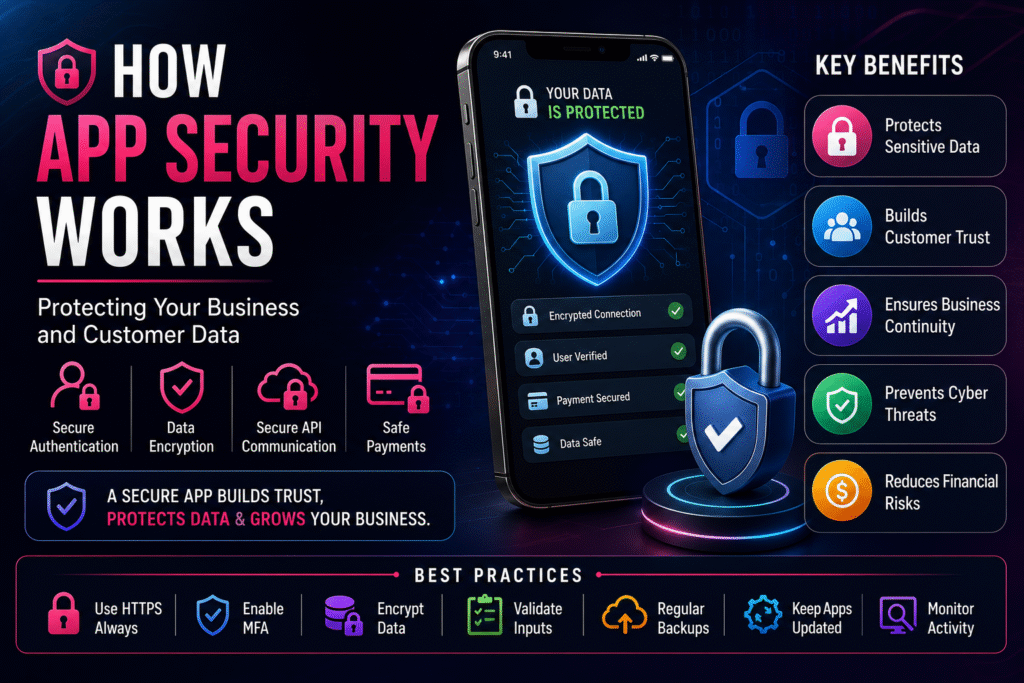
🔐 How App Security Works: Protecting Your Business and Customer Data

🚀 How to Automate Your Business with a Custom App App Security Premium Blog 🔐 How App Security Works Protecting your business and customer data requires more than strong passwords. Modern mobile app security combines authentication, encryption, secure APIs, cloud protection, testing, and continuous monitoring to defend against evolving cyber threats. 🚀 What Is Mobile App Security? App security protects mobile applications from unauthorized access, malware, data breaches and cyberattacks. It secures user accounts, payment information, APIs, databases and servers so your business can operate safely. 🔑 Secure Authentication Implement Email & Password, OTP, Face ID, Fingerprint and Multi‑Factor Authentication (MFA). Strong authentication dramatically reduces the risk of account takeover. Tip: Require strong passwords and enable MFA for administrators. 🔒 Data Encryption Encrypt data both in transit and at rest. Even if information is intercepted, encryption makes it unreadable without the proper key. 🌐 API Security Protect APIs using HTTPS, SSL/TLS, JWT tokens, API keys and request validation. Secure APIs prevent unauthorized systems from accessing sensitive business data. 💳 Secure Payments Use trusted gateways with PCI DSS compliance, tokenization and fraud detection. Avoid storing raw card details unless your infrastructure is fully compliant. ☁️ Cloud & Backup Security Store business data securely using encrypted cloud infrastructure, automated backups, disaster recovery and access monitoring. 🧪 Continuous Security Testing Perform penetration testing, vulnerability scans, code reviews and security audits before and after launch. Security is an ongoing process, not a one-time task. 🛡️ Best Practices Use HTTPS, validate user input, secure APIs, monitor suspicious activity, update libraries regularly and educate employees about cybersecurity awareness. 💡 Why It Matters A secure app builds customer trust, protects your reputation, reduces downtime, prevents financial losses and helps meet regulatory compliance requirements across industries like healthcare, finance and e-commerce. WhatsApp 📱 Device-Level Security Modern smartphones provide hardware-backed protection through biometric authentication, secure enclaves and device PIN verification. Integrating these capabilities gives users an additional layer of protection beyond passwords. Best Practice: Combine biometrics with server-side authentication for stronger security. 🔍 Regular Security Testing Professional app development teams continuously test applications through penetration testing, vulnerability scanning, source-code reviews and security audits. Continuous testing helps identify weaknesses before attackers can exploit them. 🚨 Protection Against Common Threats Threat Protection SQL Injection Input validation & parameterized queries Cross-Site Scripting (XSS) Output sanitization & secure coding Brute Force Attacks Rate limiting & MFA Session Hijacking Secure tokens & HTTPS Malware Code signing & app integrity checks 🔄 Updates & Security Patches Cyber threats evolve constantly. Regular updates, dependency upgrades, operating system compatibility checks and timely security patches keep your application resilient and compliant. 🏢 Industries That Require Strong Security Banking, healthcare, insurance, SaaS, government, education, logistics and e-commerce platforms all process sensitive information and require robust security controls to meet customer expectations and compliance standards. 💡 Final Thoughts Security should never be treated as an afterthought. By combining secure authentication, encryption, protected APIs, continuous monitoring and regular testing, businesses can protect customer data, reduce operational risk and build long-term trust. Key Takeaway: Investing in security early is significantly less expensive than recovering from a security breach. Build a Secure, Future‑Ready Mobile App Create applications that prioritize user trust, business continuity and scalable growth with security built into every layer. Start Your Project Submit your request Recent Post What Is Custom Software?

DEVELOPMENT

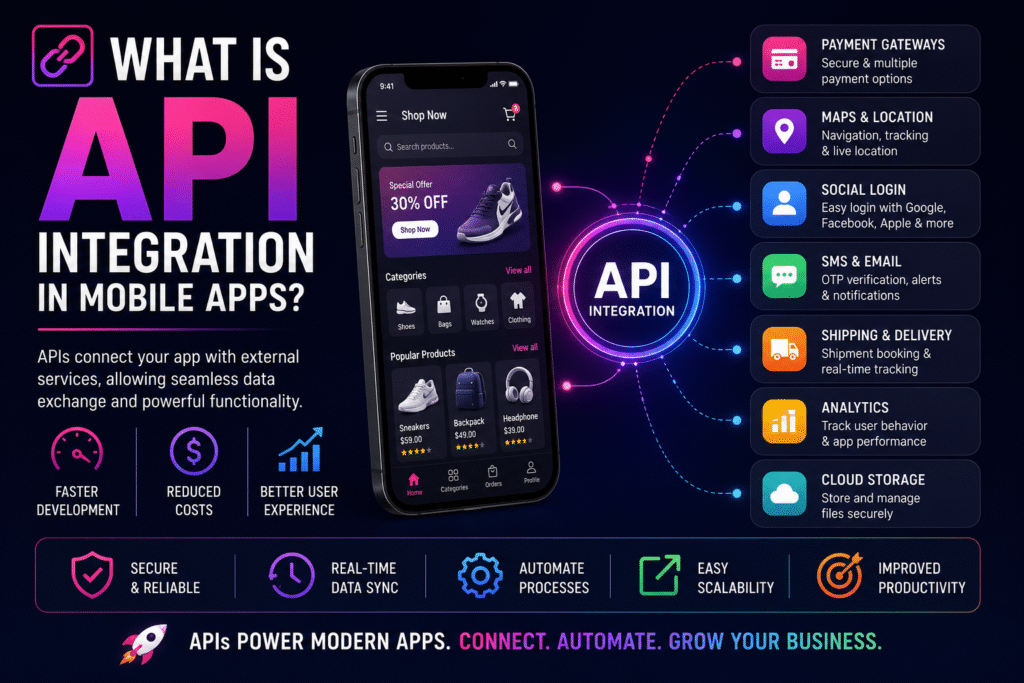
🔗 What Is API Integration in Mobile Apps?

🚀 How to Automate Your Business with a Custom App     🔗 Mobile App Development Guide   . 8+ API Types 24/7 Automation Fast Integration Scale Business Growth Contents Introduction What is an API? API Integration Why It Matters Payment APIs Part 1 of the premium blog. 📱 Introduction Mobile apps have become an essential part of modern businesses, offering online shopping, digital payments, booking systems and real-time tracking. Behind these features is API Integration—the technology that allows your application to communicate with external systems securely and efficiently. Business Insight: APIs help you launch faster by reusing trusted services instead of building everything from scratch.Mobile AppsBusiness Growth 🚀 What Is an API? An API (Application Programming Interface) acts as a messenger between two software systems. It receives requests, communicates with another service, and returns the required information within seconds. Think of an API as a waiter taking your order to the kitchen and bringing the finished meal back to your table. 🔗 What Is API Integration? API integration connects your app with payment gateways, maps, CRMs, cloud storage, social logins, SMS providers and many other services so data flows automatically without manual work. 💡 Why API Integration Matters Businesses use APIs to reduce development time, improve customer experience, automate operations, access third-party services and scale applications efficiently. 💳 Payment Gateway Integration Integrating payment APIs such as Razorpay, Stripe or PayPal enables secure online payments, multiple payment options and faster checkout experiences for customers. API Integration in Mobile Apps Premium Blog • Part 2 — Core API integrations and business use cases. 📍 Google Maps Integration Map APIs allow businesses to display live locations, route navigation, nearby places and real-time delivery tracking. Industries like food delivery, logistics, taxi booking and real estate depend on maps to improve customer experience. Business Insight: Live tracking builds trust and reduces customer support requests.MapsTrackingLocation🔐 Social Login Integration Users can sign in using Google, Apple ID, Facebook or LinkedIn instead of creating new accounts. This reduces friction during registration and improves user onboarding. Benefits: Faster sign-ups, better user experience and higher conversion rates.GoogleAppleOAuth📩 SMS & Email APIs Messaging APIs automate OTP verification, appointment reminders, order confirmations, invoices and marketing campaigns using providers like Twilio, MSG91 and SendGrid. Business Insight: Automated communication keeps customers informed and engaged.OTPEmailNotifications📦 Shipping & Delivery APIs E-commerce businesses integrate courier APIs to create shipments, track packages, update delivery status and manage logistics from one place. Benefits: Better transparency, smoother delivery workflows and happier customers.LogisticsCourierE-commerce  Analytics APIs Analytics platforms help monitor downloads, active users, screen views, purchases and retention. These insights support better marketing and product decisions. Business Insight: Data-driven decisions improve ROI and product growth.AnalyticsInsightsGrowth☁️ Cloud Storage APIs Cloud integrations allow apps to securely store images, videos, documents and customer data while ensuring high availability and scalability. Benefits: Reliable storage, faster access and effortless scaling.CloudStorageScalabilitytable>IntegrationPrimary PurposeBusiness ValueMaps APINavigation & TrackingReal-time customer updatesSocial LoginAuthenticationHigher registrationsSMS/EmailNotificationsBetter communicationShipping APIDelivery ManagementImproved logisticsAnalytics APIUser BehaviourSmarter business decisionsCloud APIData StorageReliable infrastructure API Integration in Mobile Apps — Part 3 🏢 Business Software Integration Custom mobile apps can connect with CRM, ERP, inventory, accounting and HR systems to eliminate duplicate work and automate operations. Information flows between systems in real time, improving productivity and reducing manual errors. Business Insight: Integrating existing software protects your investment while improving operational efficiency. 📈 Benefits of API Integration API integration enables faster development, lower costs, real-time synchronization, better automation, improved customer experience, higher productivity and effortless scalability. Businesses can launch new features quickly by using trusted third-party services instead of building everything from scratch. ⚠️ Challenges of API Integration Businesses should evaluate API security, rate limits, third-party downtime, version updates and documentation quality. Proper planning and experienced developers help minimize these risks. Tip: Always choose APIs with strong documentation, active support and long-term reliability. 🌟 Real-World Example An online grocery app uses multiple APIs simultaneously. Payment APIs process transactions, inventory APIs check stock, notification APIs send confirmations, delivery APIs assign drivers and Google Maps APIs provide live tracking. All of these services work together seamlessly to create an excellent customer experience.   🚀 How to Choose the Right APIs Choose APIs based on security, scalability, performance, documentation quality, pricing, uptime and customer support. Trusted providers reduce future maintenance and ensure stable application performance as your business grows. 💡 Final Thoughts API integration is the backbone of modern mobile applications. It enables apps to communicate with external services, automate business processes and deliver seamless digital experiences. Whether you’re building an e-commerce platform, healthcare app, booking solution or enterprise system, choosing the right APIs will improve performance, accelerate development and support long-term business growth. ❓Quick FAQs What is an API?A bridge that allows software systems to communicate. Why use APIs?To save development time and add trusted functionality. Are APIs secure?Yes, when implemented with authentication, encryption and best practices. Ready to Build a Powerful Mobile App? Leverage secure API integrations to create scalable, feature-rich applications that delight your users and streamline your business. Start Your Project Submit your request Recent Post What Is Custom Software?

DEVELOPMENT

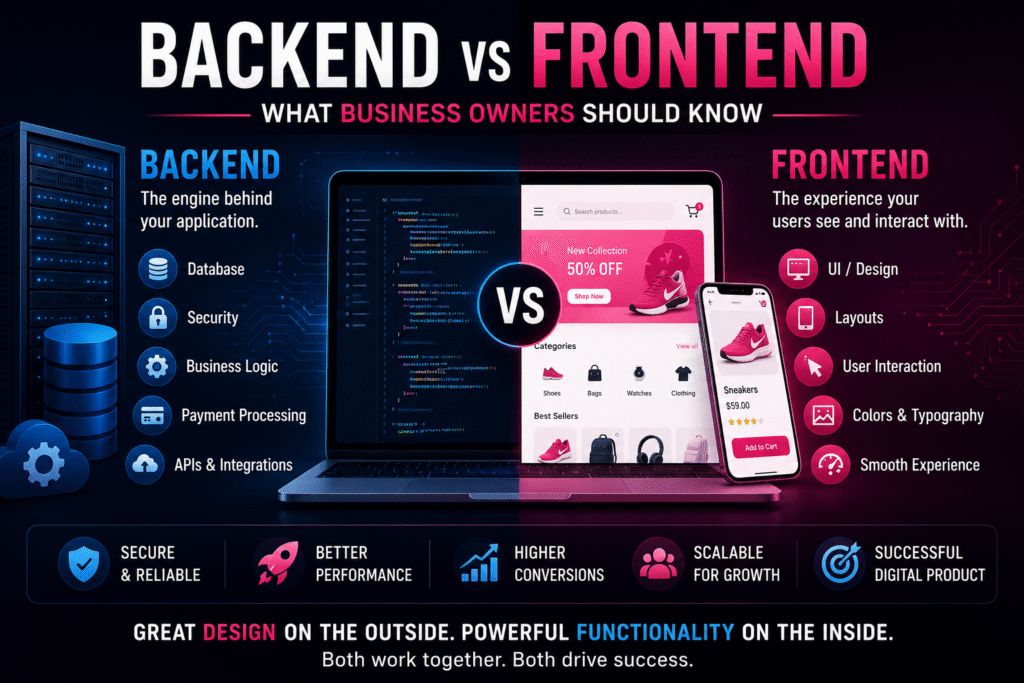
🖥️ Backend vs Frontend: What Business Owners Should Know

🚀 How to Automate Your Business with a Custom App Backend vs Frontend: What Business Owners Should Know Backend vs Frontend: What Business Owners Should Know Understanding both frontend and backend development helps business owners communicate better with developers, plan projects effectively, and build reliable digital products. 🌐 What Is Frontend Development? Frontend development is the part of your website or mobile app that customers directly see and interact with. It includes the home page, navigation, product pages, dashboards, forms, buttons, images, animations, and overall design. A well-crafted frontend creates a strong first impression and makes it easy for users to complete actions such as purchasing products or booking services. Business Value: Better user experience leads to higher engagement, trust, and conversions. UIUXCustomer Experience ⚙️ What Is Backend Development? The backend is the engine that powers your application behind the scenes. It manages databases, authentication, business logic, payment processing, APIs, notifications, and security. Without a backend, a website can display information but cannot process user actions or store data securely. Business Value: A strong backend ensures reliability, security, scalability, and smooth operations. APIDatabaseSecurity 📊 Backend vs Frontend Comparison Feature Frontend Backend Visible to Users Yes No Main Focus User Interface & Experience Business Logic & Data Handles Layouts, Forms, Navigation Server, Database, APIs Technologies React, Vue, Flutter Node.js, Laravel, Django 🔄 How They Work Together When a customer places an order, the frontend collects the information while the backend validates the payment, checks inventory, stores the order, and sends confirmation messages. Neither can function effectively without the other. A successful digital product balances a beautiful interface with a powerful technical foundation. 💡 Final Thoughts Frontend attracts users and delivers an engaging experience. Backend keeps your business running efficiently by processing data, securing information, and supporting growth. Investing in both ensures your website or app is visually appealing, reliable, and ready to scale. Submit your request Recent Post What Is Custom Software?

DEVELOPMENT

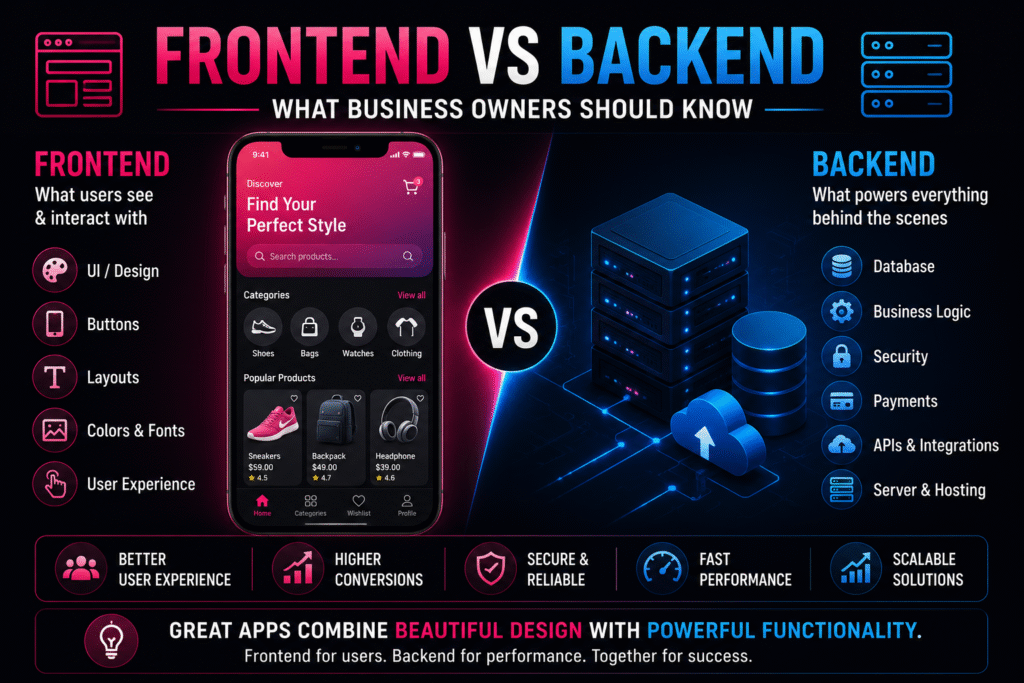
🖥️ Backend vs Frontend: What Business Owners Should Know

🚀 How to Automate Your Business with a Custom App Backend vs Frontend 🖥️ Business Guide Backend vs Frontend: What Business Owners Should Know Learn how both layers work together to build successful digital products. 2 Core Layers UX Frontend API Backend 100% Business Ready Comparison Feature Frontend Backend Visible Yes No Focus UI/UX Logic & Database Goal User Experience Business Operations 🖥️ What Is Frontend Development? Everything users see and interact with. Business Insight: Both frontend and backend are essential for delivering a secure, scalable and engaging application.FrontendBackendGrowth⚙️ What Is Backend Development? Server-side logic, databases, APIs and security. Business Insight: Both frontend and backend are essential for delivering a secure, scalable and engaging application.FrontendBackendGrowth🎯 Frontend vs Backend Frontend delivers experience; backend powers functionality. Business Insight: Both frontend and backend are essential for delivering a secure, scalable and engaging application.FrontendBackendGrowth📱 Why Frontend Matters Improves engagement and conversions. Business Insight: Both frontend and backend are essential for delivering a secure, scalable and engaging application.FrontendBackendGrowth🔐 Why Backend Matters Provides speed, security and scalability. Business Insight: Both frontend and backend are essential for delivering a secure, scalable and engaging application.FrontendBackendGrowth🔄 How They Work Together Frontend sends actions, backend processes data. Business Insight: Both frontend and backend are essential for delivering a secure, scalable and engaging application.FrontendBackendGrowth💳 Food Delivery Example Frontend for ordering, backend for processing. Business Insight: Both frontend and backend are essential for delivering a secure, scalable and engaging application.FrontendBackendGrowth🏗️ Which Is More Important? Both are equally important. Business Insight: Both frontend and backend are essential for delivering a secure, scalable and engaging application.FrontendBackendGrowth📊 Frontend Investment Best for customer-facing apps. Business Insight: Both frontend and backend are essential for delivering a secure, scalable and engaging application.FrontendBackendGrowth⚙️ Backend Investment Best for data-heavy systems. Business Insight: Both frontend and backend are essential for delivering a secure, scalable and engaging application.FrontendBackendGrowth🚨 Common Mistakes Ignoring scalability and security. Business Insight: Both frontend and backend are essential for delivering a secure, scalable and engaging application.FrontendBackendGrowth💼 Choosing the Right Partner Hire experts in both. Business Insight: Both frontend and backend are essential for delivering a secure, scalable and engaging application.FrontendBackendGrowth 💡 Final Thoughts A successful digital product combines beautiful design with powerful backend technology. Start Your Project Submit your request Recent Post What Is Custom Software?

DEVELOPMENT

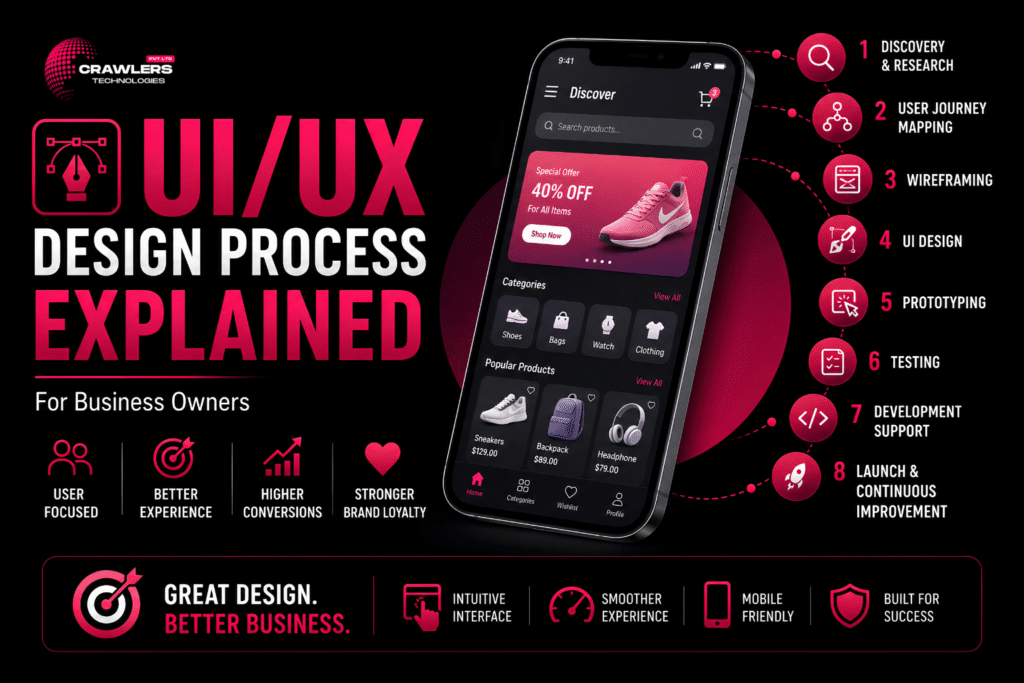
🎨 UI/UX Design Process Explained for Business Owners

🚀 How to Automate Your Business with a Custom App UI UX Design Process 🎨 Business Owner Guide UI/UX Design Process Explained Understand the complete UI/UX workflow from discovery to continuous improvement. 10+ Stages UX User First UI Modern Design 100% Responsive 🚀 What Is UI Design? Visual elements users interact with. Business Impact: Better user experience improves engagement and conversions.DesignUXGrowth💡 What Is UX Design? Overall experience and usability. Business Impact: Better user experience improves engagement and conversions.DesignUXGrowth🤔 Why UI/UX Matters Improves engagement, trust and conversions. Business Impact: Better user experience improves engagement and conversions.DesignUXGrowth📋 Business Discovery Understand goals and audience. Business Impact: Better user experience improves engagement and conversions.DesignUXGrowth👥 User Research Analyze users and pain points. Business Impact: Better user experience improves engagement and conversions.DesignUXGrowth🗺️ User Journey Mapping Map user interactions. Business Impact: Better user experience improves engagement and conversions.DesignUXGrowth✏️ Wireframing Blueprints before visuals. Business Impact: Better user experience improves engagement and conversions.DesignUXGrowth🎨 UI Design Brand colors, typography and components. Business Impact: Better user experience improves engagement and conversions.DesignUXGrowth📱 Interactive Prototyping Clickable experience before coding. Business Impact: Better user experience improves engagement and conversions.DesignUXGrowth🧪 Usability Testing Validate with real users. Business Impact: Better user experience improves engagement and conversions.DesignUXGrowth⚙️ Design Handoff Assets and specs for developers. Business Impact: Better user experience improves engagement and conversions.DesignUXGrowth🚀 Development Support Maintain consistency. Business Impact: Better user experience improves engagement and conversions.DesignUXGrowth📊 Continuous Improvement Iterate with analytics. Business Impact: Better user experience improves engagement and conversions.DesignUXGrowth🎯 Key Principles Simple, fast, consistent. Business Impact: Better user experience improves engagement and conversions.DesignUXGrowth🚨 Common Mistakes Clutter and poor navigation. Business Impact: Better user experience improves engagement and conversions.DesignUXGrowth💼 Why Hire Professionals? Save time and improve quality. Business Impact: Better user experience improves engagement and conversions.DesignUXGrowth 💡 Final Thoughts Good UI/UX creates products people enjoy using while supporting your business goals. Start Your Design Journey Submit your request Recent Post What Is Custom Software?