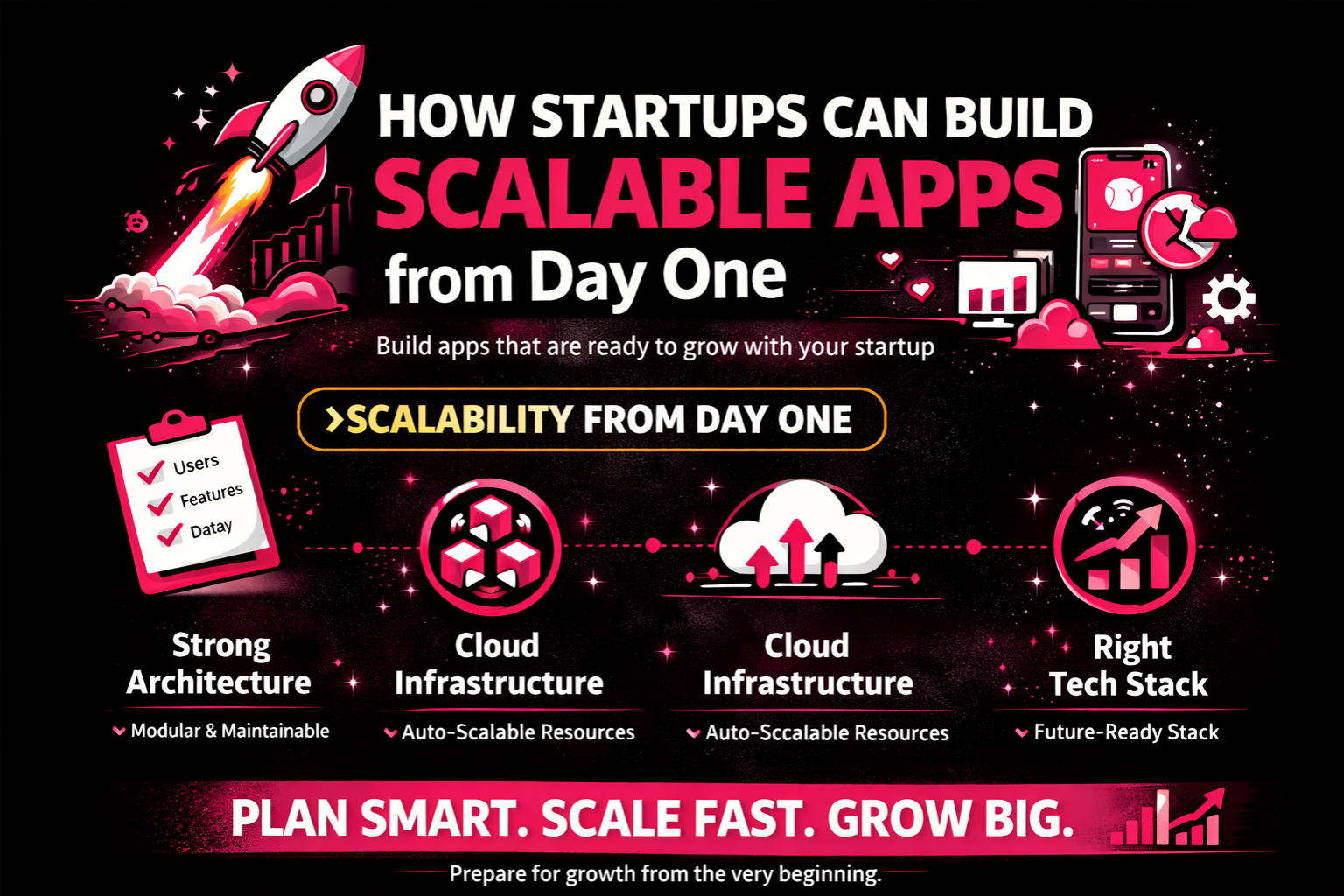
For startups, building a mobile app is not just about launching — it’s about growing. Many startups fail because their apps cannot handle increased users, new features, or business expansion.
Scalability ensures your app can grow smoothly without performance issues or costly rebuilds.
So, how can startups build scalable apps from day one? Let’s break it down.
💡 What is a Scalable App?
A scalable app is designed to handle growth efficiently.
As your business grows, your app should be able to:
- Support more users
- Process more data
- Add new features easily
- Maintain performance under high traffic
Scalability is the key to long-term success.
🧠 1. Start with a Strong Architecture
Your app’s foundation determines its scalability.
Choose:
- Modular architecture
- Microservices (for complex apps)
- Clean and maintainable code structure
A strong architecture makes it easier to scale without rebuilding the entire system.
☁️ 2. Use Cloud-Based Infrastructure
Cloud platforms help your app scale automatically.
Benefits:
- Flexible storage
- On-demand resources
- Better performance
- Cost optimization
Cloud infrastructure ensures your app can handle sudden traffic spikes.
⚙️ 3. Choose the Right Technology Stack
Selecting the right technologies is crucial.
Consider:
- Backend frameworks (Node.js, Django, etc.)
- Scalable databases (SQL/NoSQL)
- Cross-platform tools (Flutter, React Native)
The right stack supports future growth and performance.
📊 4. Build an MVP First — But Plan for Scale
Start with an MVP to test your idea, but design it with scalability in mind.
✔ Avoid hardcoding features
✔ Keep the code flexible
✔ Plan future integrations
This ensures your app can evolve without major changes.
🚀 5. Optimize Performance from the Start
Performance directly impacts user experience.
Focus on:
- Fast loading speed
- Efficient data handling
- Optimized APIs
- Caching mechanisms
A fast app retains users and supports growth.
🔐 6. Prioritize Security & Data Management
As your app scales, data security becomes critical.
Ensure:
- Secure APIs
- Data encryption
- Regular backups
- Access control systems
Security should grow with your app.
🧪 7. Continuous Testing & Monitoring
Scaling apps require continuous monitoring.
Use tools to:
- Track performance
- Detect errors
- Analyze user behavior
- Identify bottlenecks
Regular testing prevents issues during growth.
🔄 8. Plan for Regular Updates
A scalable app evolves over time.
Be ready to:
- Add new features
- Improve UI/UX
- Fix bugs
- Upgrade systems
Continuous improvement keeps your app competitive.
👨💻 9. Work with an Experienced Development Team
A skilled development team understands scalability from day one.
They help you:
- Choose the right architecture
- Avoid technical mistakes
- Build future-ready systems
- Scale efficiently
Choosing the right partner saves time and cost in the long run.
📈 10. Think Long-Term, Not Just Launch
Many startups focus only on launching quickly.
But success comes from:
✔ Planning for growth
✔ Designing for scalability
✔ Building flexible systems
A scalable app grows with your business — without limitations.
💡 Final Thoughts
Building a scalable app from day one is one of the smartest decisions a startup can make.
It ensures your app can:
✔ Handle increasing users
✔ Adapt to market needs
✔ Support business expansion
✔ Deliver consistent performance
Don’t just build an app — build a system that grows with your vision.