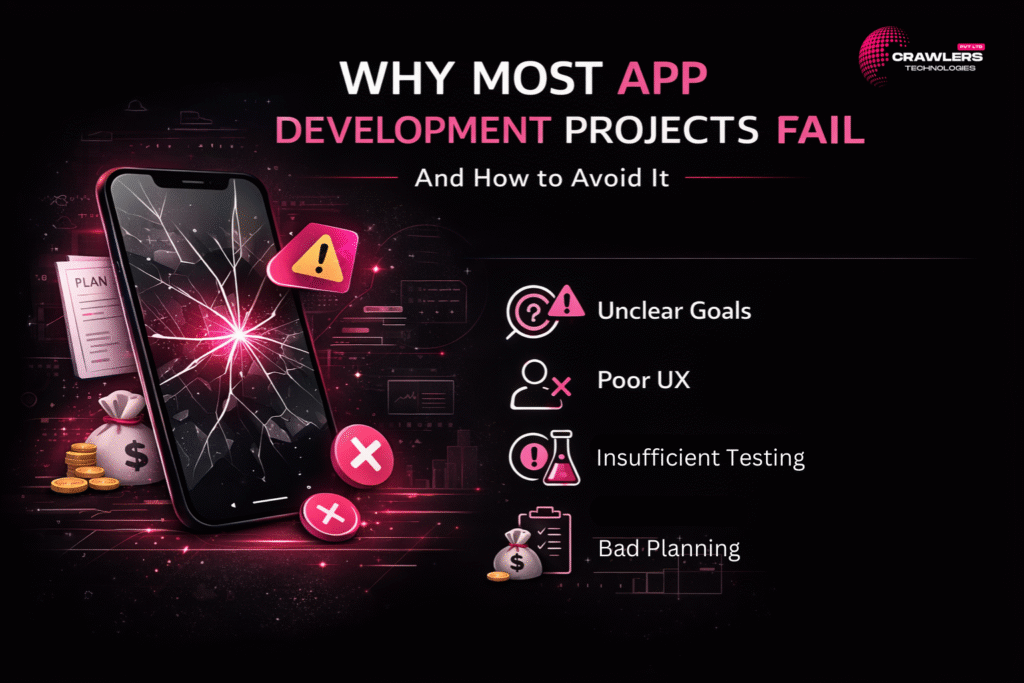
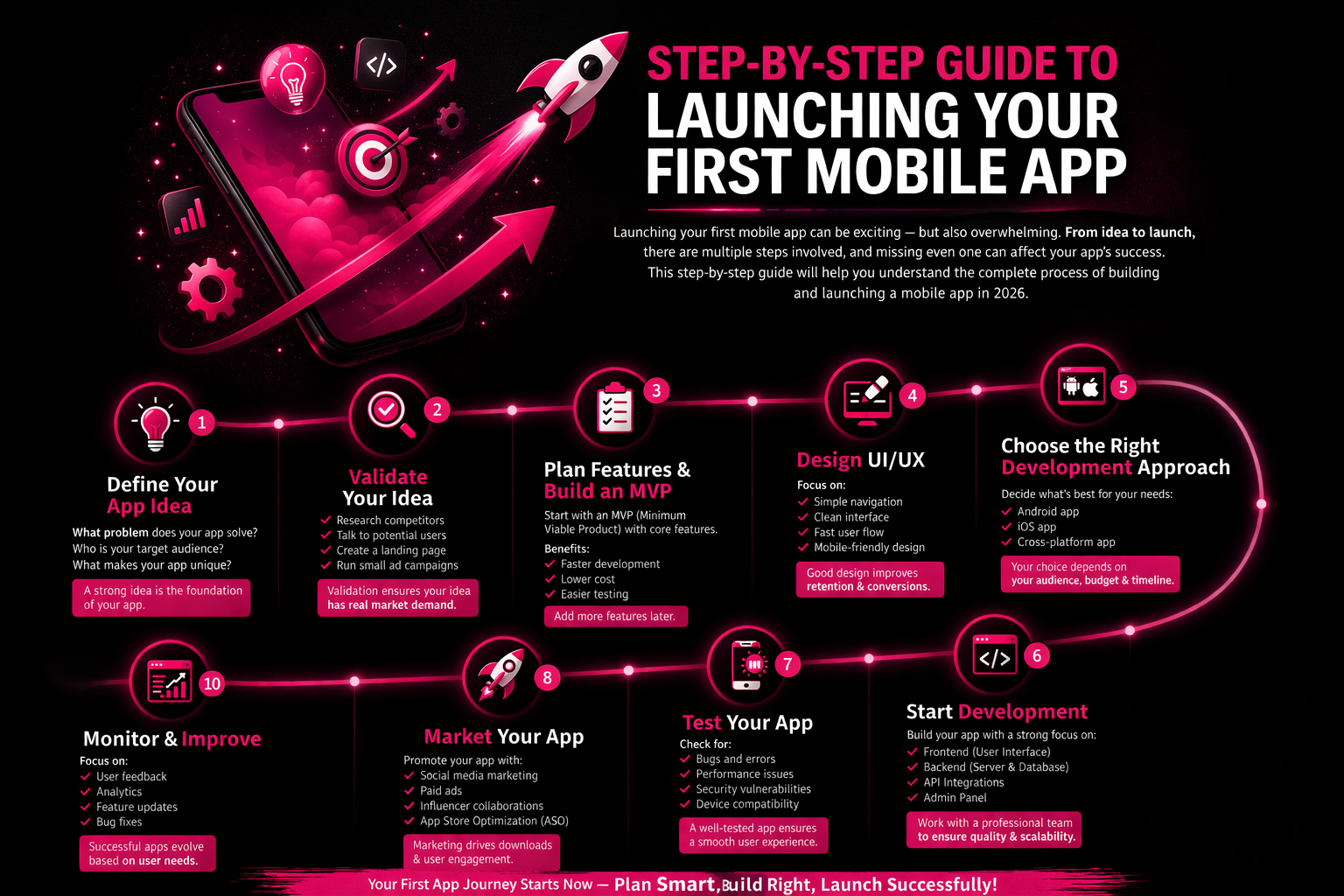
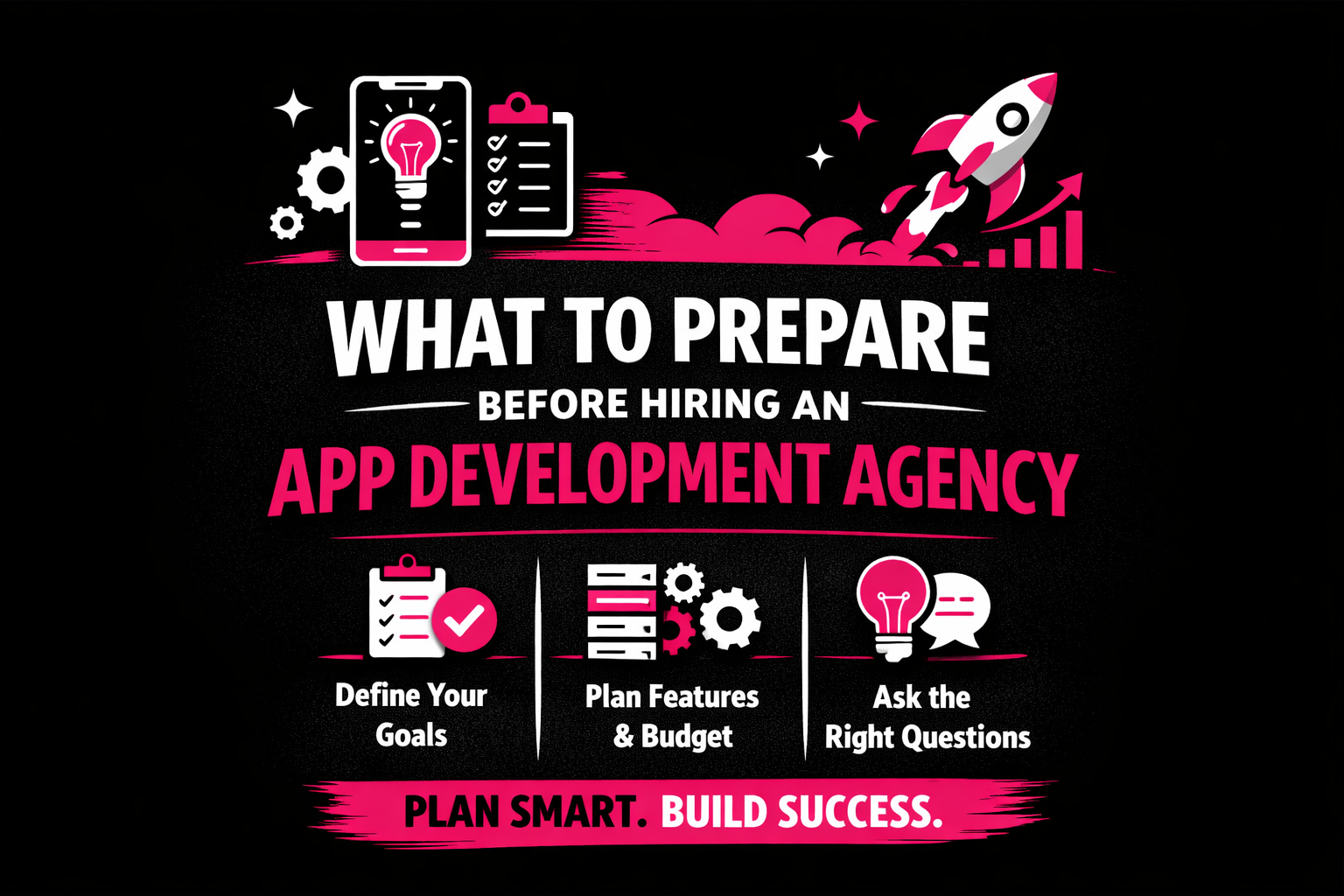
Mobile apps are powerful tools for business growth, customer engagement, and digital transformation. However, many app development projects fail before achieving their goals.
According to industry reports, a large percentage of mobile apps fail due to poor planning, lack of strategy, or misunderstanding user needs.
The good news is that these failures can be avoided with the right approach.
Let’s explore the common reasons why app development projects fail and how your business can avoid these mistakes.
⚠️ 1. Lack of Clear Business Goals
One of the biggest reasons app projects fail is the absence of a clear objective.
Many businesses build apps simply because competitors have one, without defining what the app should achieve.
Common unclear goals:
How to Avoid It
Define clear goals such as:
✔ Increasing customer engagement
✔ Generating online sales
✔ Automating business processes
✔ Improving customer service
A clear purpose ensures the app delivers real value.
📊 2. Poor Market Research
Building an app without understanding your audience is a major risk.
If your app doesn’t solve a real problem, users won’t download or continue using it.
How to Avoid It
Conduct research to understand:
Your target audience
Competitor apps
User expectations
Market demand
Research ensures your app fills a real need.
🎨 3. Bad User Experience (UX)
Many apps fail because they are difficult to use.
Common UX issues include:
Users abandon apps quickly if they feel frustrated.
How to Avoid It
Focus on:
✔ Simple design
✔ Fast performance
✔ Clear navigation
✔ Smooth user journey
User experience should always be a priority.
💰 4. Budget Mismanagement
Some businesses underestimate the cost of app development.
As a result, projects get delayed or abandoned halfway.
How to Avoid It
Plan for:
Development costs
Design costs
Testing and QA
Post-launch maintenance
A realistic budget keeps the project stable.
🧩 5. Too Many Features at Launch
Trying to include every possible feature in the first version often leads to delays and complexity.
How to Avoid It
Start with an MVP (Minimum Viable Product) that includes only core features.
This allows you to:
✔ Launch faster
✔ Test the market
✔ Improve based on user feedback
🧪 6. Insufficient Testing
Skipping proper testing leads to bugs, crashes, and poor performance.
A buggy app quickly loses user trust.
How to Avoid It
Ensure proper testing for:
Functionality
Performance
Security
Device compatibility
Quality assurance is essential before launch.
📉 7. No Marketing Strategy
Many businesses assume that once the app is launched, users will automatically find it.
Unfortunately, that rarely happens.
How to Avoid It
Plan marketing strategies such as:
Marketing is critical for app adoption.
🔄 8. Ignoring Post-Launch Updates
An app is not a one-time project.
Without updates, apps become outdated, insecure, and irrelevant.
How to Avoid It
Regularly update your app with:
✔ Bug fixes
✔ Security improvements
✔ New features
✔ Performance upgrades
Continuous improvement keeps users engaged.
💡 Final Thoughts
App development failures usually occur due to poor planning, unrealistic expectations, and lack of user focus.
However, businesses that follow the right development strategy can build successful, scalable mobile applications.
A successful app requires:
✔ Clear goals
✔ Market research
✔ Strong UX design
✔ Proper testing
✔ Continuous updates
With the right approach and development team, your app can become a powerful tool for business growth.