Turning an idea into a successful mobile app is an exciting journey — but it requires the right strategy, planning, and execution.
Many businesses jump into development without understanding the full process, which leads to delays, cost overruns, or even project failure.
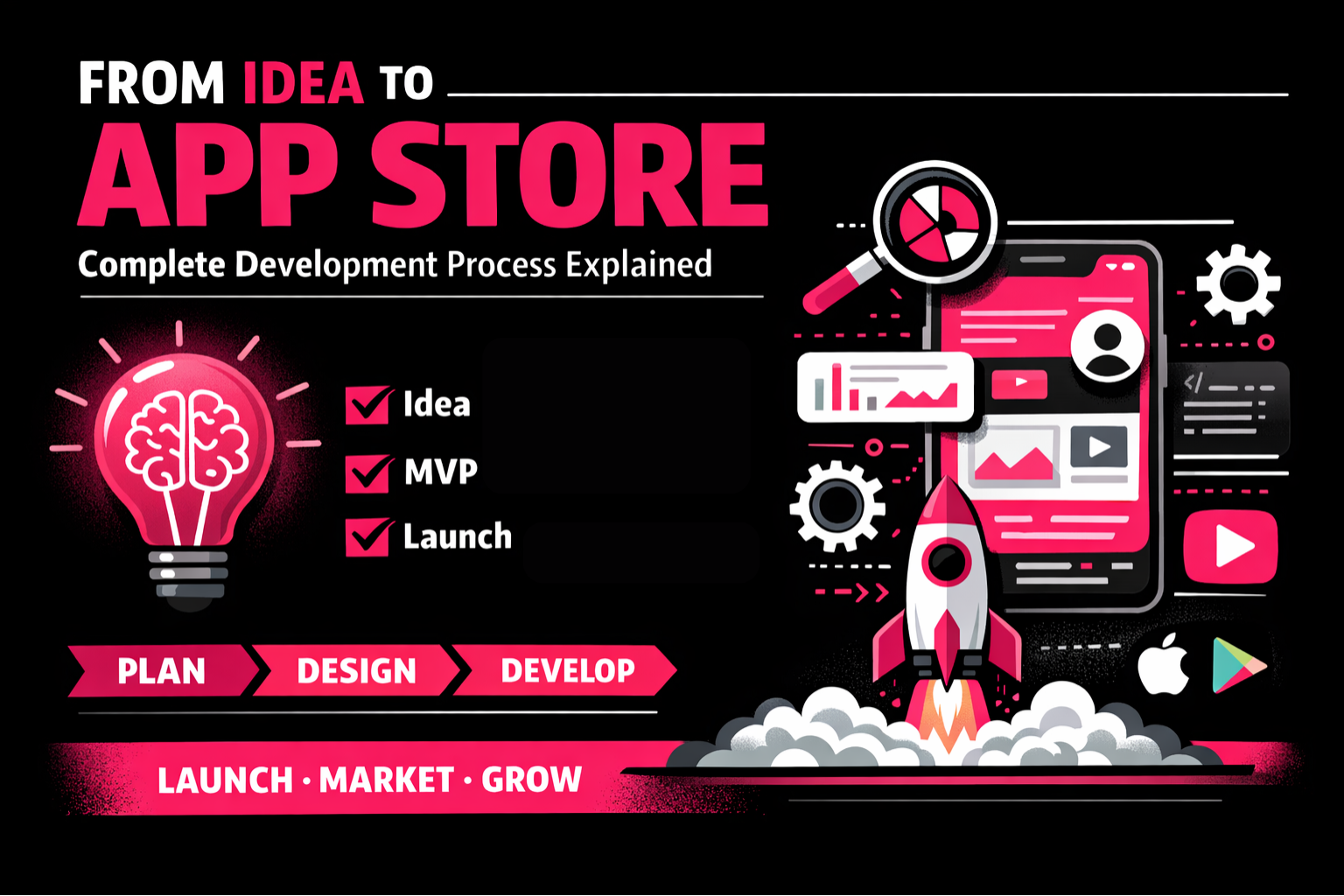
In this blog, we’ll walk you through the complete mobile app development process, from idea to App Store launch.
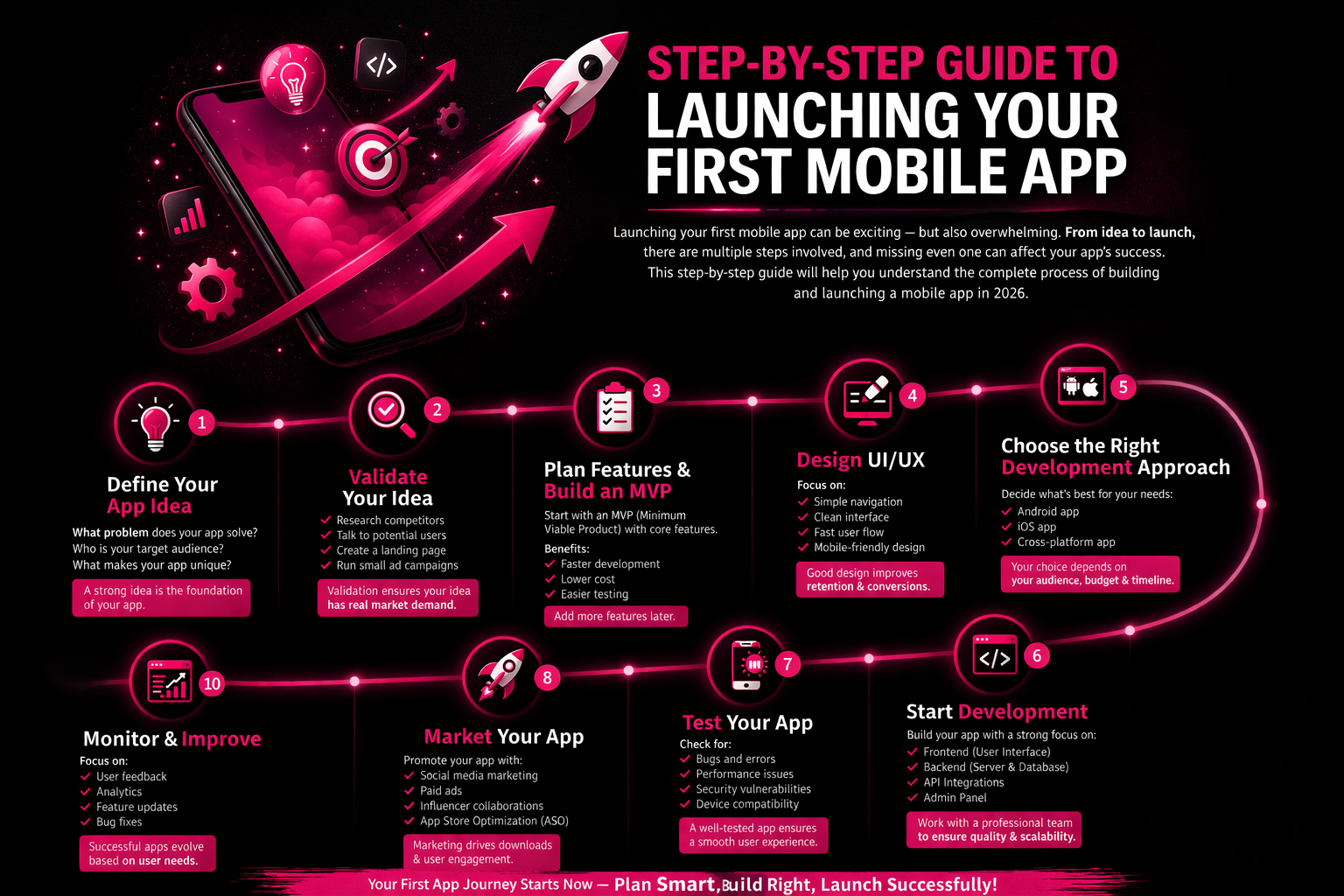
💡 1. Idea & Problem Identification
Every successful app starts with solving a real problem.
Before anything else, ask:
- What problem does your app solve?
- Who are your target users?
- Why would people use your app?
A strong idea with real value is the foundation of your app.
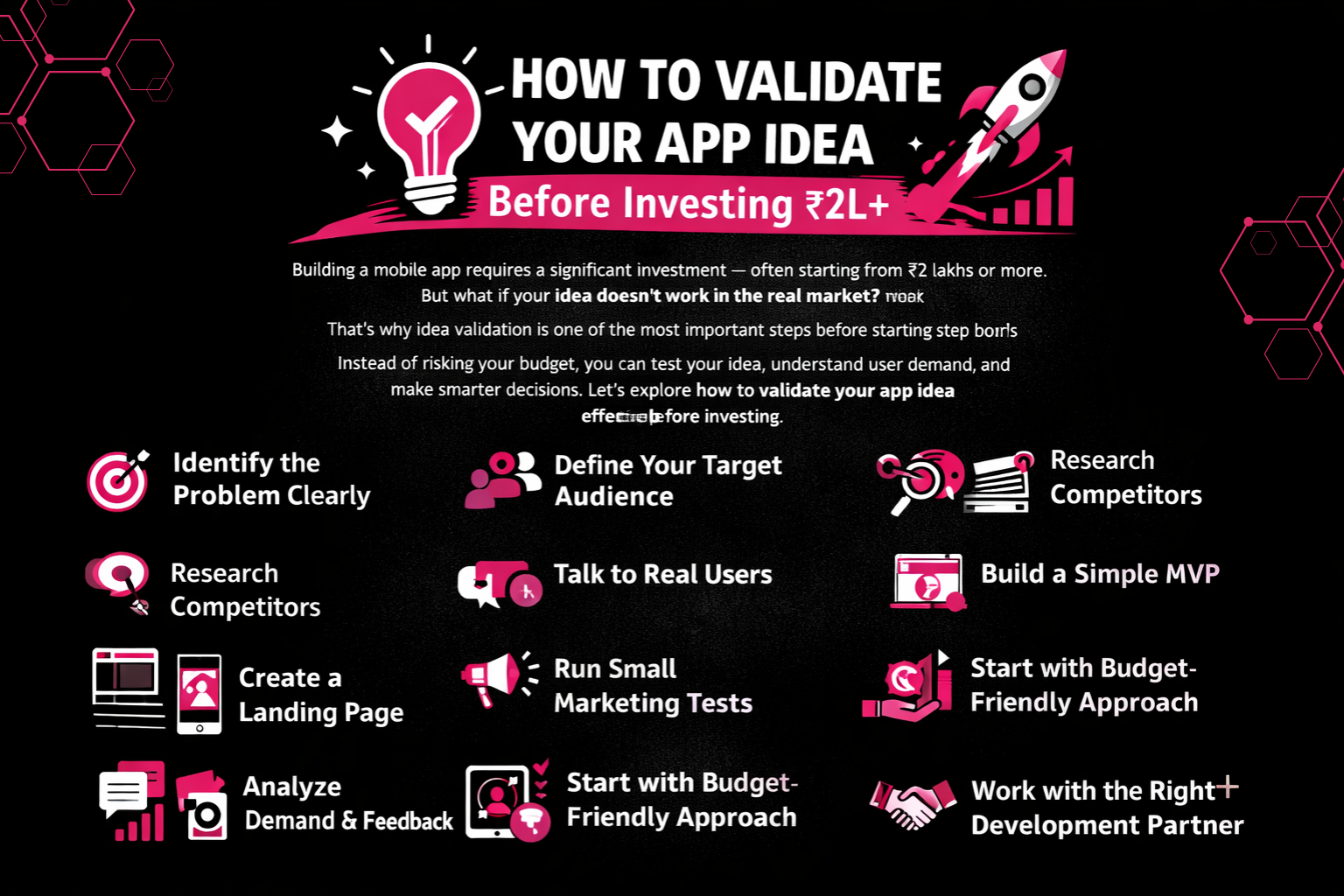
🔍 2. Market Research & Validation
Before investing in development, validate your idea.
This includes:
- Competitor analysis
- User surveys
- Studying market demand
- Identifying gaps in existing solutions
Validation reduces risk and ensures your app has real demand.
📊 3. Feature Planning & MVP Strategy
Instead of building a full app immediately, define your MVP (Minimum Viable Product).
Focus on:
- Core features only
- Essential functionality
- User problem-solving
This approach saves time and money while helping you launch faster.
🎨 4. UI/UX Design
Design is critical for user engagement.
This stage includes:
- Wireframes (basic layout)
- User flow planning
- Visual design
- Interactive prototypes
A well-designed app improves usability and increases retention.
⚙️ 5. Technology Stack Selection
Choosing the right technology is crucial.
Options include:
- Android development
- iOS development
- Cross-platform frameworks (Flutter, React Native)
The choice depends on your budget, timeline, and target audience.
👨💻 6. App Development
This is the core stage where your app is built.
It involves:
- Frontend development (UI)
- Backend development (server, database)
- API integrations
- Admin panel setup
A structured development process ensures scalability and performance.
🧪 7. Testing & Quality Assurance
Before launch, your app must be thoroughly tested.
Testing includes:
- Functional testing
- Performance testing
- Security testing
- Device compatibility testing
Proper QA ensures a smooth and bug-free user experience.
🚀 8. Deployment & App Store Submission
Once testing is complete, your app is ready for launch.
Steps include:
- Publishing on Google Play Store
- Submitting to Apple App Store
- Meeting store guidelines
- App review and approval
Approval timelines may vary depending on the platform.
📢 9. Marketing & Launch Strategy
Launching your app is just the beginning.
You need a strong marketing plan:
- Social media promotion
- Paid ads
- Influencer marketing
- App Store Optimization (ASO)
Marketing drives downloads and user engagement.
🔄 10. Maintenance & Updates
Post-launch support is essential for long-term success.
This includes:
- Bug fixes
- Performance improvements
- Feature updates
- Security enhancements
Apps must evolve continuously to stay competitive.
📊 Development Timeline Overview
| Phase |
Duration |
| Planning & Research |
2–4 weeks |
| Design |
3–6 weeks |
| Development |
2–6 months |
| Testing |
2–4 weeks |
| Launch |
1–2 weeks |
💡 Final Thoughts
Building a mobile app is a step-by-step process that requires careful planning, execution, and continuous improvement.
By following the right development process, you can:
✔ Reduce risks
✔ Save costs
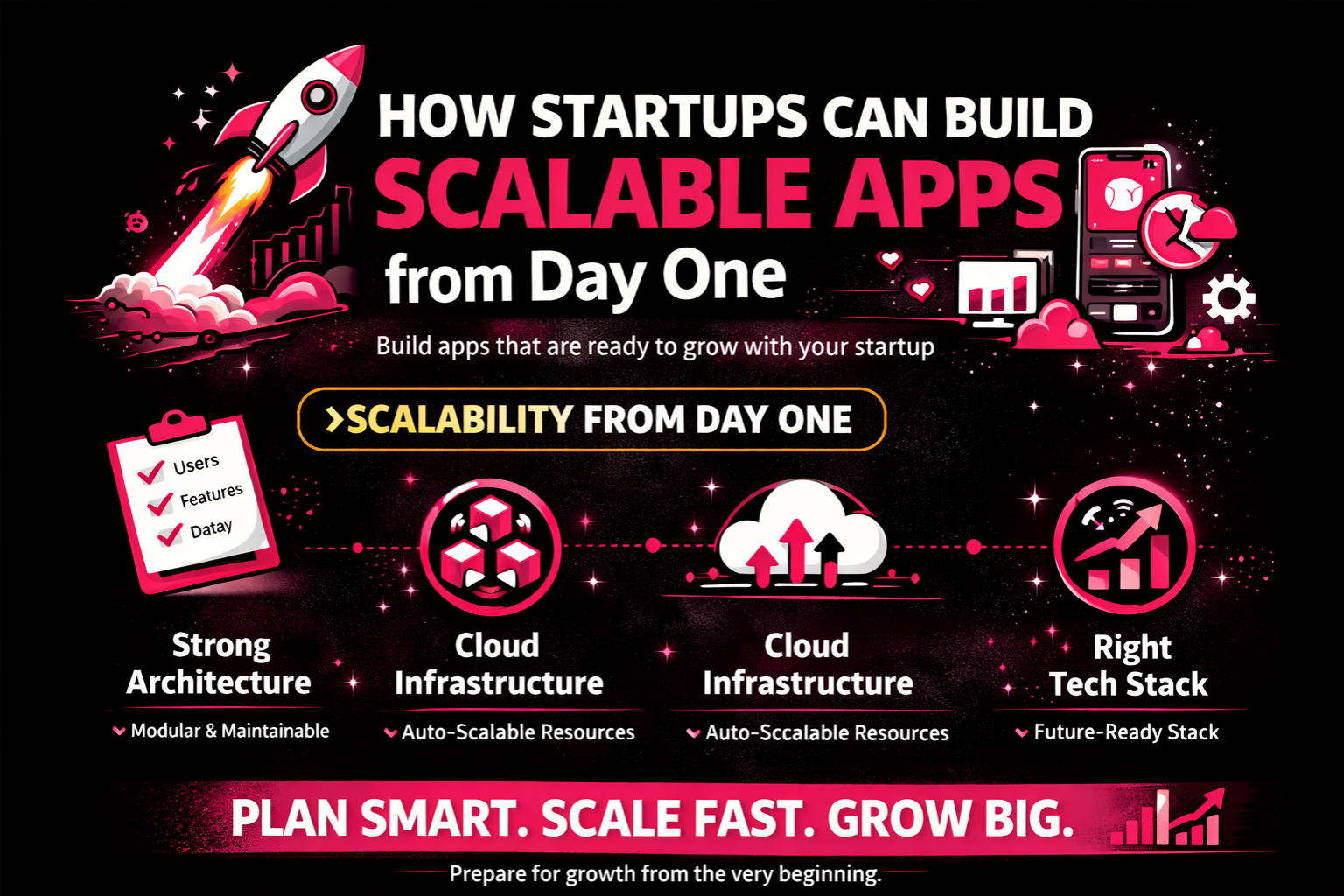
✔ Build a scalable app
✔ Deliver a great user experience
From idea to App Store, every step matters.